


ASCCP Management Guidelines
4.590.00 Reviews
App Specs
- Version
- 2.4.3
- Updated On
- License
- $14.99
- Downloads
- 10,000+
- Developer
- ASCCP
- Categories
- Medical
- Platform
- Android, iOS
Screenshots
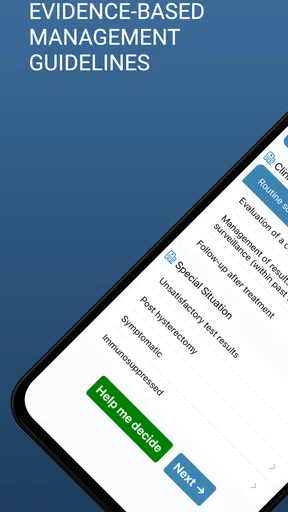
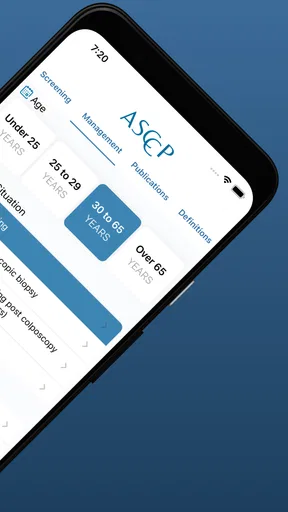
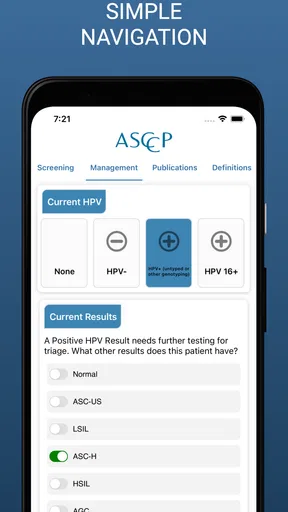
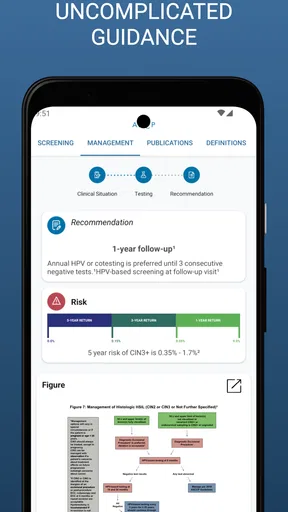
 Analysis by AppCompare
When a clinical decision depends on the right cervical cancer management guidance, I want a source I can consult quickly without losing sight of the patient in front of me. That is the practical promise of ASCCP Management Guidelines: a medical reference from ASCCP focused on cervical cancer management. I see its strongest potential in the moment when a clinician needs to orient themselves around guidance, rather than in replacing clinical judgment or a fuller review of a patient’s record.
It is a paid app, listed at $14.99, so I would think about its role before downloading it. A focused reference can be worth paying for when it fits into regular clinical work; it is harder to justify for someone who only occasionally encounters these decisions. The app is rated 4.5 on average, based on around 300 ratings, and has over 10,000 installs. Those figures suggest it has found an audience, but they do not tell me whether it suits a particular clinic’s workflow, so I would weigh the price against how often I expect to use it.
Using a focused clinical reference with care
The audience matters here. I would consider the app most relevant to healthcare professionals who manage cervical screening results, surveillance, or follow-up, and to learners who need to become familiar with this area. It is not a general medical reference, a diagnostic service, or a substitute for training. Patients looking for personal advice would be better served by discussing their circumstances with a qualified clinician instead of trying to interpret management guidance on their own.
Trust starts with knowing what the app is for
On the trust question, I separate the app’s stated purpose from claims I cannot responsibly make about how it handles information. Its focus is clinical guidance, and the developer is ASCCP. I would not treat that fact alone as proof of a particular privacy practice, nor would I enter identifiable patient details into any clinical app without first checking its current privacy information and the choices it makes visible to users.
This distinction is especially important for a tool used near patient care. A guideline reference can help a clinician think through a decision, but it does not automatically become an approved place to store patient information. My practical rule would be to consult the relevant guidance without entering names, dates of birth, or other identifiers unless the app’s current terms, privacy disclosures, and workplace policies clearly support that use.
What the experience suggests—and what I would verify
The published version is 2.4, and the app is rated for Everyone. It was released on June 20, 2020, and requires Android 5.0 or later. Those details help with basic compatibility, but they do not establish how recently its clinical content has been reviewed. In medicine, the publication date of an app and the currency of its recommendations are separate questions. Before relying on any specific recommendation, I would check the app’s own update information and compare it with the current guidance used by my organization.
I also would not assume that features such as offline use, automatic content updates, personalized risk calculations, or educational modules are present just because they might be useful in a guideline app. What matters is what the installed version actually shows. When evaluating it, I would look for clear navigation back to the relevant recommendation, visible version or update details, and a straightforward way to distinguish general educational material from guidance applied to an individual case.
Worth Reading Before You Choose

Flipboard Shows What News Apps Must Do Beyond the Feed

Switching to Android Auto Means Rethinking Your Driving Routine

Google Calendar Makes a Crowded Week Easier to Manage

Ludo King Makes the Most of the Minutes Between Plans

Baby Panda World Brings Quick Play to Modern Phones, but Its Game Library Feels Busy

ESPN’s Live Game View Makes Following Close Games Easier
Keep patient details out of the wrong workflow
A realistic use case is a clinician reviewing a screening result between appointments. The app may serve as a point of reference while they consider which management pathway is relevant, but the patient’s full record and clinical context still matter. I would use the tool to frame a question, then confirm the recommendation against the patient’s history and the practice’s procedures rather than treating a quick lookup as a complete assessment.
That workflow also offers a useful privacy habit: search by a clinical term or situation, not by a patient’s identifying details. If a screen appears to invite entry of patient information, I would pause and establish what is stored, whether it can be removed, and what account or device controls are available before proceeding. This is not a claim that the app collects such information; it is a sensible boundary for any medical tool used during care.
Where it fits beside other references
Compared with broad medical reference apps, a specialist guideline tool can reduce the work of sorting through unrelated topics. Its narrow focus is an advantage when cervical management is the question at hand, but a limitation when the clinician needs broader context, drug information, or guidance from another specialty. A professional may still need institutional protocols, authoritative guideline publications, or consultation with a colleague for decisions that are unusual or complex.
For students, the app may be useful as a companion while learning how recommendations are organized, but I would pair it with teaching materials that explain the reasoning behind a pathway. A concise reference helps answer “where do I look next?”; it may not, by itself, teach the nuance needed to understand why a recommendation changes with a patient’s history. That distinction is one reason I would not use it as a stand-alone course or exam resource.
First impressions and navigation
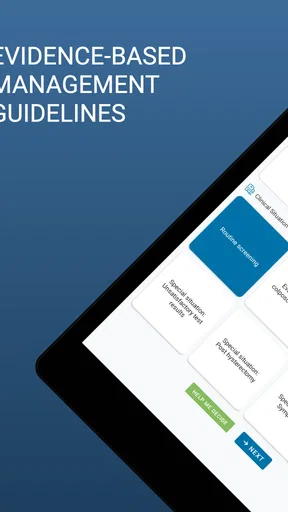
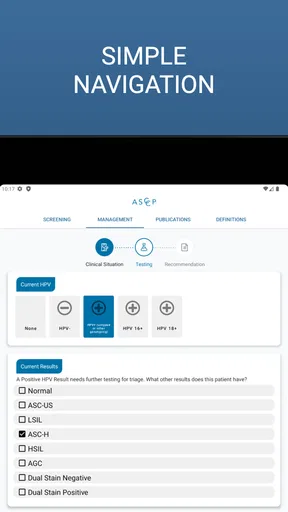
Upon launching the app, what immediately caught my attention was its clean and intuitive user interface. You don't have to be tech-savvy to find your way around. The home screen is minimalistic, with clear sections that guide you to the information you need. Whether you're looking for management guidelines, risk assessments, or educational resources, everything is laid out in an organized manner.
The app's color scheme is soothing, which is essential when you're spending a lot of time reading through clinical guidelines. The fonts are easy on the eyes, and the app's navigation is responsive. I particularly appreciated the search functionality, which is quick and efficient, letting you find specific guidelines or terms in seconds.
Reading the guidance in context
The ASCCP Management Guidelines app stands out with its extensive and up-to-date content. It covers a wide range of topics, from screening and surveillance to treatment and follow-up recommendations. The guidelines are developed by experts and are regularly updated to reflect new research and changes in medical practice.
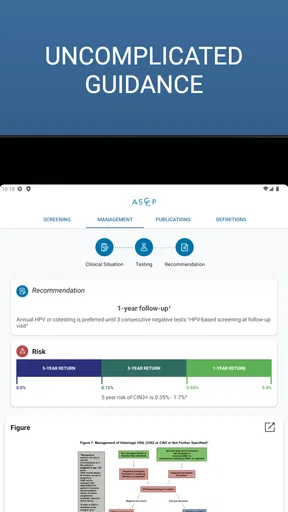
One of the app’s most impressive features is its ability to personalize recommendations based on patient history and risk factors. This level of detail not only enhances decision-making but also ensures that you're providing the best care possible. It’s like having a team of experts in your pocket, ready to offer advice anytime.
When applying a recommendation, I would take care to match the scenario to the details that matter rather than stopping at a broad search result. A practical approach is to identify the clinical question first, check which patient-history elements the pathway uses, and then verify that the result corresponds to the case being considered. That extra pause can prevent a quick reference from being mistaken for a complete clinical decision.
Learning value and patient conversations
Beyond guidelines, the app offers a treasure trove of educational resources. Whether you're a seasoned professional or a student, you'll find value in the detailed articles and case studies. The app also includes interactive learning modules, which are a great way to test your knowledge and stay updated on the latest practices.
There’s also a section dedicated to frequently asked questions, which addresses common concerns and misconceptions about cervical cancer screening. This is particularly useful for practitioners who might need to explain complex concepts to patients in simpler terms.
In a patient conversation, I would use reference material to prepare an explanation, not as a script or a replacement for listening. For example, if someone is worried about what a screening result means, a clinician can first clarify the patient’s concern, then use the appropriate guidance to support a plain-language discussion of next steps. The value is in making the reasoning easier to organize; the conversation still needs to be tailored to the person and their circumstances.
Checking access and updates in practice
One of the standout features of the ASCCP app is its offline accessibility. Once you've downloaded the content, you can access the guidelines without an internet connection. This is perfect for professionals who work in areas with limited connectivity. Plus, the app automatically updates its content when online, ensuring you always have the latest information at your fingertips.
Even where offline access is available, I would check what content is stored on the device and when it was last refreshed before using it for a time-sensitive question. A downloaded reference can be convenient during a poor connection, but offline convenience should not be confused with confirmation that a recommendation is current. I would also avoid relying on a device shared with others unless its lock and account settings meet the clinic’s usual privacy standards.
Everyday use without losing clinical judgment
I’ve found the app to be particularly useful during consultations. It allows for quick confirmation of guidelines, which is crucial when making informed decisions. The personalized risk assessments help tailor advice to individual patients, enhancing the quality of care.
Moreover, the app’s straightforward design means you can quickly find and reference guidelines without interrupting the flow of a consultation. It's a real time-saver, and in the world of healthcare, every second counts.
For a busy clinic, I would make the lookup part of a deliberate workflow: formulate the question before opening the app, review the relevant pathway, and then return to the patient record or local protocol to confirm the full context. This keeps the app in its proper role as a reference rather than letting a fast search dictate the whole encounter. If an answer is ambiguous, the safer next step is to consult the fuller guidance or a colleague, not to force a quick interpretation.
Who should pay for it, and who should look elsewhere
The $14.99 price makes most sense for someone who expects repeated use and values having a focused resource close at hand. Before purchasing, I would check that the current version runs on my device, that the content covers the clinical questions I actually encounter, and that its update approach fits my workplace expectations. If I only need occasional guidance, an official publication or an institution-provided reference may be a better fit; if I need broad medical coverage, a general clinical resource will likely be more useful.
The app is not the right choice for anyone seeking personal diagnosis, emergency advice, or a replacement for a clinician’s assessment. Nor would I recommend treating its rating or popularity as evidence that every recommendation is appropriate for every patient. The best use is narrower: as a specialist reference used by someone who understands the clinical setting and is prepared to verify the applicable pathway.
In summary, the ASCCP Management Guidelines app is an invaluable tool for anyone involved in cervical cancer management. Its comprehensive content, ease of use, and offline accessibility make it a standout choice for healthcare providers. Whether you're in a busy clinic or a remote location, this app ensures you have expert advice at your fingertips, helping you deliver the best possible care to your patients.
My cautious verdict is that this is worth considering for clinicians and learners who regularly work with cervical screening and management questions, provided they confirm the current content and use it within appropriate privacy and clinical boundaries. Its focused purpose is its clearest strength, while the paid price and the need to verify how a recommendation applies to an individual patient are real considerations. I would use it to support careful decisions, not to make those decisions on its own.
Pros
- User-friendly interface for quick navigation.
- Comprehensive guidelines for HPV management.
- Regular updates ensure latest information.
- Search function enhances usability.
- Available offline for convenience.
Cons
- Requires internet for updates.
- Limited to ASCCP guidelines only.
- No interactive tutorial for new users.
- Some features hidden under menus.
- No dark mode option for night use.
FAQs for ASCCP Management Guidelines
What is the ASCCP Management Guidelines app?
The ASCCP Management Guidelines app provides healthcare professionals with quick and easy access to the most current guidelines for managing abnormal cervical cancer screening tests and cancer precursors. It includes algorithms and recommendations to aid in clinical decision-making, ensuring that practitioners have the latest information at their fingertips.
Is the ASCCP Management Guidelines app free to use?
The app can be downloaded for free; however, some features or updates might require a subscription or one-time purchase. This ensures users have access to the most accurate and up-to-date information, which is essential for effective patient management.
Can the app be used offline?
Yes, the ASCCP Management Guidelines app is designed to be used offline, making it convenient for healthcare professionals who may not always have access to the internet. This feature allows users to access critical guidelines and recommendations anytime, anywhere, without needing a data connection.
How frequently is the content updated?
The app is regularly updated to reflect the latest guidelines and recommendations from the ASCCP. Users are notified of updates, ensuring they always have access to the most current information. This is crucial for maintaining best practices in patient care and management.
What platforms is the app available on?
The ASCCP Management Guidelines app is available for both Android and iOS devices. This ensures that a wide range of healthcare professionals can access the app regardless of their preferred device, facilitating widespread adoption and use in clinical settings.


